5.循环链表

第一章 自测&关键词回顾
考虑相关 操作时, 对于边界问题可以较为任意, 因为是循环的; 或者复制一份去考虑
第二章 手撕
双向循环链表(有头节点)
// 带头节点(数据域表示 链表长度)
typedef int DataType;
typedef struct circularDoubleLinkListNode {
DataType data;
struct circularDoubleLinkListNode *prev;
struct circularDoubleLinkListNode *next;
} CDLNode;
// 初始化
CDLNode *initCircularDoubleLinkList(void);
// 销毁
void destory(CDLNode *cdlist);
// 遍历
void traverse(CDLNode *cdlist);
// 指定位置插入
void insert(CDLNode *cdlist, DataType data, int posIndex);
// 删除指的位置
void erase(CDLNode *cdlist, int posIndex);
// 初始化
CDLNode *initCircularDoubleLinkList(void) {
CDLNode *phead = (CDLNode *)malloc(sizeof(CDLNode));
phead->data = 0;
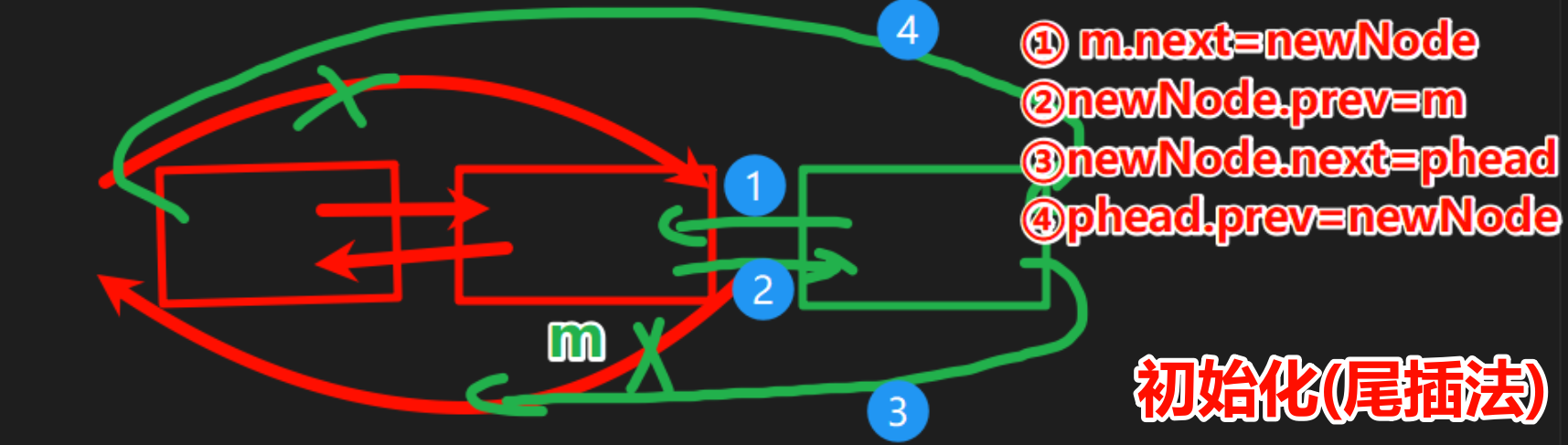
phead->next = phead->prev = phead;
int input;
while (scanf("%d", &input) == 1 && input != -1) {
CDLNode *newNode = (CDLNode *)malloc(sizeof(CDLNode));
newNode->data = input;
// 尾插法
phead->prev->next = newNode;
newNode->prev = phead->prev;
newNode->next = phead;
phead->data++;
}
return phead;
}
// 销毁
void destory(CDLNode *cdlist) {
CDLNode *pmove = cdlist->next;
while (pmove != cdlist) {
CDLNode *temp = pmove;
pmove = pmove->next;
free(temp);
}
free(cdlist);
}
// 遍历
void traverse(CDLNode *cdlist) {
int flag = 0; // 1为正向遍历
if (flag) {
CDLNode *pmove = cdlist->next;
while (pmove != cdlist) {
printf("%d->", pmove->data);
pmove = pmove->next;
}
printf("NULL Length:%d\n", cdlist->data); // 实际上没有NULL
} else {
CDLNode *pmove = cdlist->prev;
while (pmove != cdlist) {
printf("%d<-", pmove->data);
pmove = pmove->prev;
}
printf("Length:%d\n", cdlist->data);
}
}
// 指定位置插入
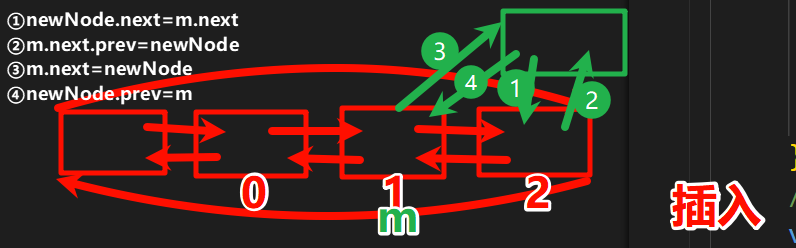
void insert(CDLNode *cdlist, DataType data, int posIndex) {
assert(!(posIndex < 0 || posIndex > cdlist->data) && "insert posIndex is illegal!");
CDLNode *newNode = (CDLNode *)malloc(sizeof(CDLNode));
newNode->data = data;
CDLNode *pmove = cdlist;
while (posIndex-- > 0) pmove = pmove->next;
newNode->next = pmove->next;
pmove->next->prev = newNode;
pmove->next = newNode;
newNode->prev = pmove;
cdlist->data++;
}
// 删除指的位置
void erase(CDLNode *cdlist, int posIndex) {
assert(!(posIndex < 0 || posIndex >= cdlist->data) && "erase posIndex is illegal!");
CDLNode *pmove = cdlist;
while (posIndex-- > 0) pmove = pmove->next;
pmove->next->next->prev = pmove;
pmove->next = pmove->next->next; // 因为循环了,分析时可以把链表倍长一倍,进行考虑
cdlist->data--;
}
// 日志颜色
// 全局变量,用于模拟输入
int *testData = NULL;
int testDataSize = 0;
int currentInputIndex = 0;
// 日志函数
void logSuccess(const char* message) {
printf("%s[✓] %s%s\n", GREEN, message, RESET);
}
void logError(const char* message) {
printf("%s[✗] %s%s\n", RED, message, RESET);
}
void logInfo(const char* message) {
printf("%s[i] %s%s\n", YELLOW, message, RESET);
}
// 自定义输入函数,替代scanf
int customInput() {
if (currentInputIndex < testDataSize) {
return testData[currentInputIndex++];
}
return -1; // 默认结束值
}
// 准备测试数据
void prepareTestData(int *data, int size) {
testData = data;
testDataSize = size;
currentInputIndex = 0;
}
// 修改后的初始化函数,使用自定义输入
CDLNode *customInitCircularDoubleLinkList(void) {
CDLNode *phead = (CDLNode *)malloc(sizeof(CDLNode));
phead->data = 0;
phead->next = phead->prev = phead;
CDLNode *pmove = phead;
int input;
while ((input = customInput()) != -1) {
CDLNode *newNode = (CDLNode *)malloc(sizeof(CDLNode));
newNode->data = input;
// 尾插法
newNode->prev = pmove;
pmove->next = newNode;
newNode->next = phead;
phead->prev = newNode;
pmove = pmove->next;
phead->data++;
}
return phead;
}
// 检查链表的完整性
bool checkListIntegrity(CDLNode *cdlist) {
logInfo("检查链表完整性...");
if (cdlist == NULL) {
logError("链表头为NULL");
return false;
}
int count = 0;
CDLNode *pmove = cdlist->next;
// 检查前向链接
while (pmove != cdlist && count < 1000) { // 防止无限循环
count++;
// 检查前后指针的一致性
if (pmove->next->prev != pmove) {
char errorMsg[100];
sprintf(errorMsg, "节点 %d 的前后指针不一致", pmove->data);
logError(errorMsg);
return false;
}
pmove = pmove->next;
}
if (count != cdlist->data) {
char errorMsg[100];
sprintf(errorMsg, "链表长度不匹配,头节点记录 %d,实际计数 %d", cdlist->data, count);
logError(errorMsg);
return false;
}
// 检查后向链接
count = 0;
pmove = cdlist->prev;
while (pmove != cdlist && count < 1000) {
count++;
// 检查前后指针的一致性
if (pmove->prev->next != pmove) {
char errorMsg[100];
sprintf(errorMsg, "节点 %d 的前后指针不一致(反向检查)", pmove->data);
logError(errorMsg);
return false;
}
pmove = pmove->prev;
}
if (count != cdlist->data) {
char errorMsg[100];
sprintf(errorMsg, "链表反向长度不匹配,头节点记录 %d,实际计数 %d", cdlist->data, count);
logError(errorMsg);
return false;
}
logSuccess("链表完整性检查通过");
return true;
}
// 创建一个参考数组,用于验证链表操作
int* createReferenceArray(CDLNode *cdlist, int *size) {
*size = cdlist->data;
int *arr = (int*)malloc(sizeof(int) * (*size));
CDLNode *pmove = cdlist->next;
for (int i = 0; i < *size; i++) {
arr[i] = pmove->data;
pmove = pmove->next;
}
return arr;
}
// 验证链表与参考数组是否一致
bool verifyWithArray(CDLNode *cdlist, int *arr, int size) {
logInfo("验证链表与参考数组一致性...");
if (cdlist->data != size) {
char errorMsg[100];
sprintf(errorMsg, "链表长度 %d 与数组长度 %d 不匹配", cdlist->data, size);
logError(errorMsg);
return false;
}
CDLNode *pmove = cdlist->next;
for (int i = 0; i < size; i++) {
if (pmove->data != arr[i]) {
char errorMsg[100];
sprintf(errorMsg, "位置 %d 处,链表值 %d 与数组值 %d 不匹配",
i, pmove->data, arr[i]);
logError(errorMsg);
return false;
}
pmove = pmove->next;
}
logSuccess("链表与参考数组一致性验证通过");
return true;
}
// 测试插入操作
bool testInsert(CDLNode *cdlist) {
printf("\n===== 测试插入操作 =====\n");
int size;
int *arr = createReferenceArray(cdlist, &size);
// 随机选择插入位置和值
int pos = rand() % (size + 1); // 可以在0到size之间插入
int val = rand() % 100;
char infoMsg[100];
sprintf(infoMsg, "在位置 %d 插入值 %d", pos, val);
logInfo(infoMsg);
// 更新参考数组
int *newArr = (int*)malloc(sizeof(int) * (size + 1));
for (int i = 0; i < pos; i++) {
newArr[i] = arr[i];
}
newArr[pos] = val;
for (int i = pos; i < size; i++) {
newArr[i + 1] = arr[i];
}
// 执行链表插入
insert(cdlist, val, pos);
// 验证
bool integrityCheck = checkListIntegrity(cdlist);
bool arrayCheck = verifyWithArray(cdlist, newArr, size + 1);
free(arr);
free(newArr);
if (!integrityCheck || !arrayCheck) {
logError("插入操作测试失败");
return false;
} else {
logSuccess("插入操作测试通过");
return true;
}
}
// 测试删除操作
bool testErase(CDLNode *cdlist) {
printf("\n===== 测试删除操作 =====\n");
if (cdlist->data == 0) {
logInfo("链表为空,跳过删除测试");
return true;
}
int size;
int *arr = createReferenceArray(cdlist, &size);
// 随机选择删除位置
int pos = rand() % size;
char infoMsg[100];
sprintf(infoMsg, "删除位置 %d 的元素(值为 %d)", pos, arr[pos]);
logInfo(infoMsg);
// 更新参考数组
int *newArr = (int*)malloc(sizeof(int) * (size - 1));
for (int i = 0; i < pos; i++) {
newArr[i] = arr[i];
}
for (int i = pos + 1; i < size; i++) {
newArr[i - 1] = arr[i];
}
// 执行链表删除
erase(cdlist, pos);
// 验证
bool integrityCheck = checkListIntegrity(cdlist);
bool arrayCheck = verifyWithArray(cdlist, newArr, size - 1);
free(arr);
free(newArr);
if (!integrityCheck || !arrayCheck) {
logError("删除操作测试失败");
return false;
} else {
logSuccess("删除操作测试通过");
return true;
}
}
// 测试初始化函数
bool testInitialization() {
printf("\n===== 测试初始化函数 =====\n");
// 生成随机测试数据
int testSize = 5 + rand() % 10; // 5-14个元素
int *initData = (int*)malloc(sizeof(int) * (testSize + 1));
logInfo("使用以下数据测试初始化函数:");
printf(" ");
for (int i = 0; i < testSize; i++) {
initData[i] = rand() % 100;
printf("%d ", initData[i]);
}
initData[testSize] = -1; // 结束标记
printf("-1\n");
// 准备测试数据
prepareTestData(initData, testSize + 1);
// 调用自定义初始化函数
CDLNode *list = customInitCircularDoubleLinkList();
// 验证初始化结果
bool result = checkListIntegrity(list);
if (result) {
char successMsg[100];
sprintf(successMsg, "初始化函数测试通过,创建了包含 %d 个元素的链表", list->data);
logSuccess(successMsg);
} else {
logError("初始化函数测试失败");
}
// 清理
destory(list);
free(initData);
return result;
}
// 主测试函数
void testCircularDoubleLinkList() {
srand(time(NULL));
printf("===== 循环双向链表测试开始 =====\n\n");
// 测试初始化
if (!testInitialization()) {
logError("初始化测试失败,终止后续测试");
return;
}
// 创建一个新的链表用于后续测试
logInfo("准备初始链表数据:");
// 自动生成测试数据
int testSize = 5 + rand() % 5; // 5-9个元素
int *mainTestData = (int*)malloc(sizeof(int) * (testSize + 1));
printf(" ");
for (int i = 0; i < testSize; i++) {
mainTestData[i] = rand() % 100;
printf("%d ", mainTestData[i]);
}
mainTestData[testSize] = -1; // 结束标记
printf("-1\n");
// 准备测试数据
prepareTestData(mainTestData, testSize + 1);
CDLNode *list = customInitCircularDoubleLinkList();
logInfo("初始链表:");
traverse(list);
if (!checkListIntegrity(list)) {
logError("初始链表完整性检查失败,终止后续测试");
destory(list);
free(mainTestData);
return;
}
// 执行多次随机插入和删除操作
int numTests = 5;
int passedTests = 0;
int totalTests = numTests * 2; // 每轮测试包含一次插入和一次删除
for (int i = 0; i < numTests; i++) {
printf("\n----- 测试轮次 %d/%d -----\n", i+1, numTests);
if (testInsert(list)) passedTests++;
logInfo("插入后的链表:");
traverse(list);
if (testErase(list)) passedTests++;
logInfo("删除后的链表:");
traverse(list);
}
printf("\n===== 测试结果汇总 =====\n");
char summaryMsg[100];
sprintf(summaryMsg, "总共执行 %d 项测试,通过 %d 项,通过率: %.1f%%",
totalTests, passedTests, (float)passedTests/totalTests*100);
if (passedTests == totalTests) {
logSuccess(summaryMsg);
logSuccess("所有测试通过,循环双向链表实现正确!");
} else {
logError(summaryMsg);
logError("部分测试未通过,请检查实现!");
}
destory(list);
free(mainTestData);
}
int main() {
testCircularDoubleLinkList();
return 0;
}
第三章 相关应用
第一节 约瑟夫环问题
约瑟夫环问题 (无头双向循环链表)
- 输入样例: 10, 4
- 第一个参数表示有10个人参加, 每个人的编号为1~10;
- 第二个参数表示有数到4的人就退出;
- 返回: 5
- 返回最后一个人的编号
typedef struct Node {
int num;
struct Node *prev;
struct Node *next;
} Node;
/** 初始化链表
* nums:有几个人参与
* 每个人的编号为1~nums
*/
Node *initJonsephRing(int nums) {
assert(nums && "No one is playing!");
Node *phead = (Node *)malloc(sizeof(Node));
phead->num = nums--;
phead->next = phead;
phead->prev = phead;
while (nums > 0) {
Node *newNode = (Node *)malloc(sizeof(Node));
newNode->num = nums--;
// 头插法`
newNode->next = phead;
phead->prev->next = newNode;
newNode->prev = phead->prev;
phead->prev = newNode;
phead = newNode;
}
return phead;
}
// 遍历
void traverseJonsephRing(Node *jring) {
Node *pmove = jring;
int flag = 1; // 控制第一个输出
while (pmove != jring || flag) {
printf("%d->", pmove->num);
pmove = pmove->next;
flag = 0;
}
puts("NULL");
}
/**删除节点
* count: 删除数到count的人
* 人不够就来回数
*/
int delete(Node *jring, int count) {
while (jring != jring->next) {
for (int i = 0; i < count - 1; i++) jring = jring->next;
Node *temp = jring; // 准备释放
jring->prev->next = jring->next;
jring->next->prev = jring->prev;
jring = jring->next;
traverseJonsephRing(temp->next); // 打印每次结果
free(temp);
}
return jring->num;
}
int josephRingProblem(int nums, int count) {
Node *jring = initJonsephRing(nums);
traverseJonsephRing(jring);
return delete (jring, count);
}
int main() {
int ans = josephRingProblem(10, 4);
printf("%d", ans);
return 0;
}
第四章 上手真题
第五章 比赛怎么用
- Title: 5.循环链表
- Author: 明廷盛
- Created at : 2026-02-12 01:17:04
- Updated at : 2025-03-25 16:13:00
- Link: https://blog.20040424.xyz/2026/02/12/🏫考研/第一部分 数据结构/5.循环链表/
- License: All Rights Reserved © 明廷盛